The best isolated guitar solos let you hear a famous lead part with nothing in the way: no vocals, no drums, just the guitarist’s tone, timing and phrasing. Below are 10 of the greatest solos you can hear isolated on Multitrack Master, from David Gilmour’s “Comfortably Numb” to Eddie Van Halen’s “Beat It”, with what to listen for in each.
How we picked these solos
Every solo here is a famous, much-imitated part from a well-known recording, and every one has a working isolated guitar track on this site. We favoured solos where hearing the guitar alone teaches you something you can’t easily hear in the full mix: a double-tracked line, a harmony part, a change of tone. Each entry links to the full post, where you’ll find the other parts of the song too.
1. Pink Floyd – Comfortably Numb (David Gilmour)
Gilmour’s two solos on “Comfortably Numb”, from The Wall (1979), regularly top readers’ polls of the greatest guitar solos. The first is slow and vocal; the outro solo builds over the closing chords for well over a minute. On the isolated track, listen to how much of the feeling comes from his bends and vibrato rather than speed. Hear it with the vocals on our Comfortably Numb post, and see more on the Pink Floyd page.
2. Michael Jackson – Beat It (Eddie Van Halen)
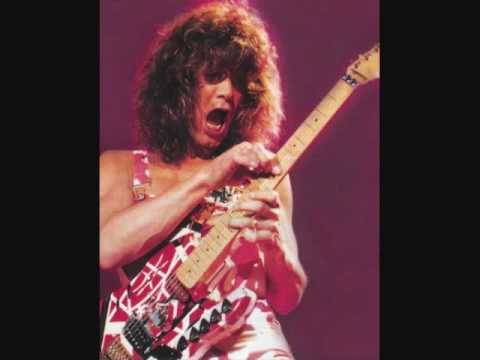
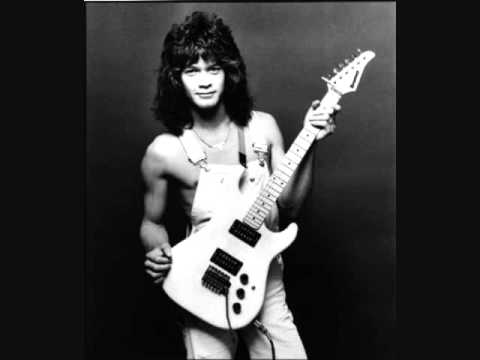
Quincy Jones brought Eddie Van Halen in to play the solo on “Beat It” from Thriller (1982). Van Halen famously did it as a favour, without payment, while Steve Lukather played the song’s main guitar parts. Alone, the solo shows his tapping runs and dive-bomb whammy-bar moves crammed into a short section of a pop single. Hear it next to Jackson’s vocal on our Beat It post, and find more Eddie on the Eddie Van Halen page.
3. Ozzy Osbourne – Crazy Train (Randy Rhoads)
Randy Rhoads’ solo on “Crazy Train”, from Blizzard of Ozz (1980), mixes classical-style runs with hard-rock attack. Rhoads was known for double-tracking his solos note for note, and the isolated guitar is the easiest way to hear how tight those layers are. He died in a plane crash in 1982, aged 25. See the Crazy Train post and the Ozzy Osbourne page.
4. Lynyrd Skynyrd – Free Bird (Allen Collins)
The long outro of “Free Bird”, from the band’s 1973 debut album produced by Al Kooper, is one of rock’s most famous guitar workouts. Allen Collins plays the main lead, and the isolated track lets you follow his phrasing through the whole section without losing it under the band. Hear the solo, drums and bass on our Free Bird post and visit the Lynyrd Skynyrd page.
5. Queen – Killer Queen (Brian May)
Brian May’s solo on “Killer Queen”, from Sheer Heart Attack (1974), is short but carefully built: several guitar parts are layered so the lines answer and harmonise with each other. With the band removed you can pick out the separate parts. Hear it on our Killer Queen guitar post and see more on the Queen page.
6. The Beatles – While My Guitar Gently Weeps (Eric Clapton)
George Harrison wrote “While My Guitar Gently Weeps” for The Beatles (“the White Album”, 1968) and invited his friend Eric Clapton to play the lead guitar. Clapton wasn’t credited on the original release. On its own, his part shows a lyrical, crying tone that answers Harrison’s vocal throughout the song, not just in the solo. Hear it on our While My Guitar Gently Weeps post and see the Beatles page.
7. Ozzy Osbourne – Mr. Crowley (Randy Rhoads)
Rhoads appears twice on this list for good reason. “Mr. Crowley”, also from Blizzard of Ozz, has two solos, and the outro is one of the most studied in hard rock. Listen to the Mr. Crowley guitar track.
8. Metallica – Master of Puppets (Kirk Hammett and James Hetfield)
The middle section of “Master of Puppets” (1986) switches from James Hetfield’s clean, melodic lead to Kirk Hammett’s fast solo. The isolated guitars show the change in tone and approach. Hear it on our Master of Puppets multitrack post and the Metallica page.
9. Stevie Ray Vaughan – Pride and Joy
From Texas Flood (1983), “Pride and Joy” is a shuffle where rhythm and lead blur into one part. Hear how Vaughan mixes chords, bass notes and lead fills on the Pride and Joy isolated guitar, and visit the Stevie Ray Vaughan page.
10. Oasis – Champagne Supernova
The closing track of (What’s the Story) Morning Glory? (1995) features Paul Weller as a guest on guitar and backing vocals. The isolated solos show how the song’s lead guitar builds over its long running time. Hear them on our Champagne Supernova solos post and the Oasis page.
Honourable mentions
Eddie Van Halen has many more isolated guitar tracks on this site, including Panama, Ain’t Talkin’ ‘Bout Love and Hot for Teacher. Browse the Van Halen page for the rest.
How to learn a solo from an isolated track
- Slow it down, don’t change the pitch. YouTube’s playback-speed setting (0.75 or 0.5) keeps the pitch the same, so you can play along at a slower tempo.
- Learn phrases, not notes. Loop one short phrase until you can sing it, then find it on the neck. The isolated track makes the phrasing far clearer than the full mix.
- Listen for layers. Many classic solos are double-tracked or harmonised. If a part sounds “thick”, there may be two guitars playing it.
- Match the tone last. Get the notes and timing right first; tone matters, but it won’t fix a phrase you haven’t learned yet.
Want more? See our lists of the best isolated bass lines and the best isolated drum tracks, and read our guide to isolated tracks to learn where these recordings come from.
FAQ
What is the best isolated guitar solo?
David Gilmour’s solos on Pink Floyd’s “Comfortably Numb” are often named the greatest guitar solos of all time, and the isolated track is one of the most popular on this site. Eddie Van Halen’s “Beat It” and Randy Rhoads’ “Crazy Train” are close behind.
Who played the guitar solo on Beat It?
Eddie Van Halen played the solo on Michael Jackson’s “Beat It” (1982). Steve Lukather of Toto played the song’s main guitar parts.
Where do isolated guitar tracks come from?
They usually come from the original multitrack recordings, released for video games, remixes or remasters, or shared by people who worked with the tapes. Some newer videos are made with AI stem separation, which can leave audible artifacts.