To EQ a mix well, start at the bottom: give the kick and bass their own space first, then clean up the mids and highs, and mostly cut rather than boost. The quickest way to hear what that sounds like is to listen to isolated bass and drum tracks from famous records. Soloed, they often sound thinner or stranger than you’d expect, and that’s the point. Each part was shaped to fit with the others, not to sound complete on its own.
This guide walks through a practical EQ process for any DAW and uses isolated tracks from Queen, Led Zeppelin and Michael Jackson as listening references.
What EQ is actually for
EQ (equalization) does two jobs in a mix:
- Making room. Every instrument takes up space across the frequency spectrum. When two parts compete for the same range, such as kick and bass in the low end or guitars and vocals in the midrange, the mix gets muddy and nothing sounds clear. EQ lets you carve out space so each part has its own lane.
- Shaping tone. EQ also lets you bring out the best character of each sound: the attack of a snare, the body of an acoustic guitar, the presence of a voice.
The first job matters more. A mix where every track sounds amazing soloed but fights for space will sound worse than a mix of ordinary-sounding tracks that fit together.
Listen first: isolated bass and drums from famous records
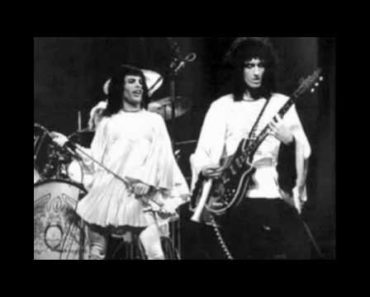
Before touching an EQ, listen to how professional records separate the low end. John Deacon’s bass line on Queen’s “Another One Bites the Dust” (1980) is the whole song’s hook. Listen to the bass on its own, then the drums on their own:
Isolated bass: Queen, “Another One Bites the Dust”
Isolated drums: Queen, “Another One Bites the Dust”
Notice how tight and dry the kick is, and how the bass carries the melody and the low-end weight. The two parts lock rhythmically but don’t pile up on the same low frequencies. That’s exactly what you’re aiming for when you EQ kick and bass together. See the full “Another One Bites the Dust” multitrack post for the guitar stem too.
For contrast, here’s a much bigger, roomier low end: John Paul Jones and John Bonham on Led Zeppelin’s “Whole Lotta Love” (1969).
Isolated bass and drums: Led Zeppelin, “Whole Lotta Love”
Here the drums carry a lot of room sound, and the bass and kick share more space. That’s a stylistic choice, and it works because the arrangement leaves room for it. More on that track on our “Whole Lotta Love” isolated tracks post.
A step-by-step EQ process
1. Start with the kick
Begin with the lowest element in the mix, usually the kick drum. Solo it briefly and decide where its weight lives (the “thump”) and where its click or attack lives. Most kicks also carry sub-bass rumble below what small speakers or many listeners can reproduce. A gentle high-pass filter that removes only the energy you don’t need frees up headroom for everything else. Use a spectrum analyzer, which comes with most modern DAWs and EQ plugins, to see what’s there, but make the final decision by ear.
2. EQ the bass with the kick playing
Next, work on the bass, but don’t do it in solo. Listen to the bass with the kick so you hear it in context. Decide which part owns the very lowest range. If the kick owns the sub, take a little out of the bass there and let the bass’s body and harmonics carry the note. If the bass owns the sub (common in modern pop and hip-hop), shape the kick to sit above it. Then play both with the full mix and check that the low end feels solid, not boomy.
Modern tools help here. Dynamic EQ cuts a frequency only when it builds up, and sidechain-triggered EQ dips the bass slightly each time the kick hits. Both keep the low end tight without making either part thin.
3. Clean up the midrange
Move on to snare, guitars, keys, pads and synths. The midrange is where most mixes get crowded. A reliable way to find a problem frequency:
- Set an EQ band to a fairly wide boost.
- Sweep it slowly up and down until the unpleasant ring, honk or boxiness jumps out.
- Narrow the band until you’ve pinpointed it.
- Turn the boost into a cut, then reduce the cut until the problem just disappears.
Be careful with this technique. Sweeping boosts make everything sound bad after a while, so take breaks and only cut what you can still hear as a problem at normal volume.
4. Cut before you boost
As a rule, it’s better to remove what you don’t want than to boost what you do. Cuts tend to sound more natural, keep more headroom, and avoid the harsh, hyped sound that comes from stacking boosts on every track. If a vocal sounds dull, try cutting the muddy low-mids before you reach for a treble boost. Often the brightness was there all along.
5. Add the top end last
Hi-hats, cymbals, the air on vocals and the shimmer on acoustic guitars live at the top of the spectrum. The same principle applies: clearing low-mid buildup often makes the top end feel brighter without any boosting. When you do boost highs, use a gentle shelf and listen for harshness and sibilance on the vocal.
Hearing EQ on a famous vocal
Isolated vocals are a great reference for top-end EQ. Listen to Michael Jackson’s isolated vocal on “Billie Jean”, produced by Quincy Jones and engineered by Bruce Swedien for Thriller (1982). It’s clear and present without sounding harsh, so it cuts through a busy rhythm track. Compare it with other vocal-only tracks to hear how differently great vocals can be shaped.
EQ in 2026: what’s changed
The fundamentals above haven’t changed, but the tools have:
- Every DAW ships with a capable parametric EQ, usually with a built-in spectrum analyzer.
- Dynamic and multiband EQs fix problems that only show up at certain moments, such as a boomy note or a harsh word.
- Collision and “unmasking” tools show where two tracks overlap and suggest cuts. They’re useful, but treat them as a starting point.
- AI stem separation lets you split a finished song into vocals, bass, drums and other parts. This is a powerful way to study how a reference track’s low end is balanced. Our isolated tracks guide explains how it works and its limits.
Where EQ fits in the mix
EQ is usually the first processing step when you start a mix. Clearing out conflicts early gives you room for everything else, including compression, reverb and level balancing. It’s also where many of the biggest improvements happen. A few well-placed cuts can make a cluttered mix sound open and professional before you’ve added a single effect.
The best way to train your ears is still to listen to great records. Browse isolated tracks by artist, such as Queen, Led Zeppelin or Michael Jackson, and listen to how each part is shaped to fit.
FAQ
Should I EQ tracks in solo?
Briefly, to find problems, yes. Make your final decisions with the full mix playing. A part that sounds thin soloed often sounds perfect in context, as many famous isolated tracks show.
Is it better to cut or boost with EQ?
Cutting is usually better. It sounds more natural and preserves headroom. Use boosts sparingly and gently, mainly for character once conflicts are cleared.
What order should I EQ instruments in?
A common approach is bottom-up: kick, then bass (with the kick playing), then snare and midrange instruments, then vocals and the high end.
Can I learn EQ from isolated tracks?
Yes. Isolated and stem tracks from famous records show how each part was shaped to fit the mix, which is hard to hear in the finished song.